Five Challenges Putting Transit Fleet Uptime to the Test
There is no such thing as a convenient bus breakdown. It usually happens during peak service, while the spare ratio is tight and three other vehicles are already occupying the bays.
That is the reality inside public transit maintenance facilities today. Agencies must provide reliable service while dealing with aging vehicles, technician shortages, parts delays and fleets that may include diesel, CNG, hybrid and battery-electric buses under one roof.
The work is getting more complicated and the clock is not getting any slower.
Challenge 1: Keeping Enough Buses on the Road
Approximately 40 percent of transit agencies report lacking enough operable vehicles at least a few times each month. Aging fleets, delayed parts, and mechanic shortages are among the leading causes. About 22 percent of transit buses have also exceeded the Federal Transit Administration’s minimum useful-life guideline.
When brake, suspension, or driveline work enters the shop, technicians need fast, unobstructed access.
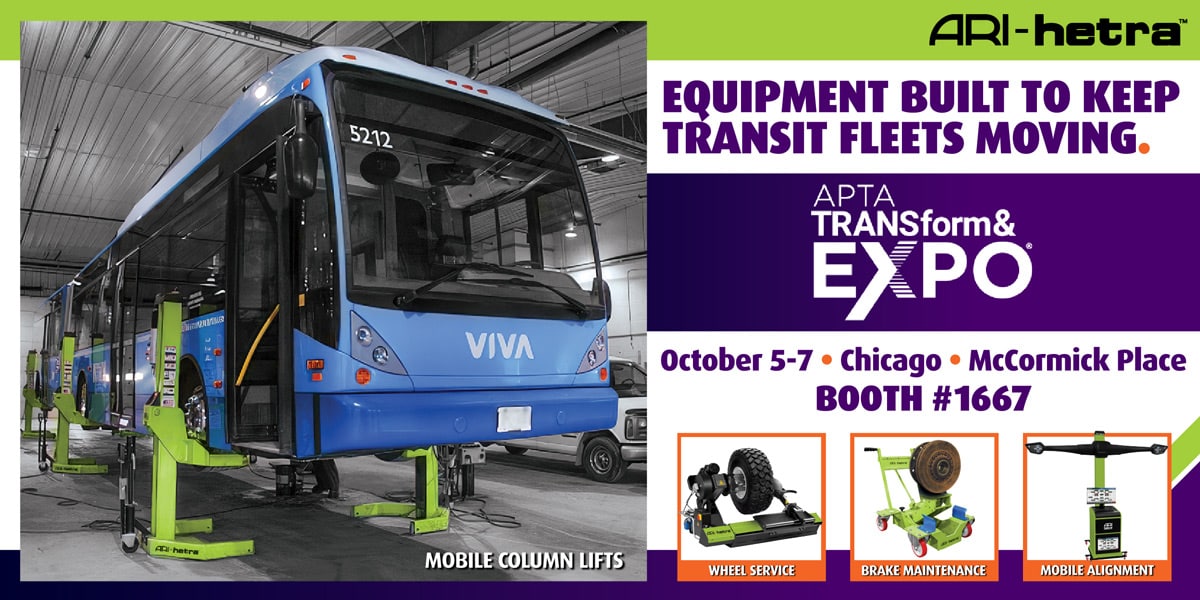
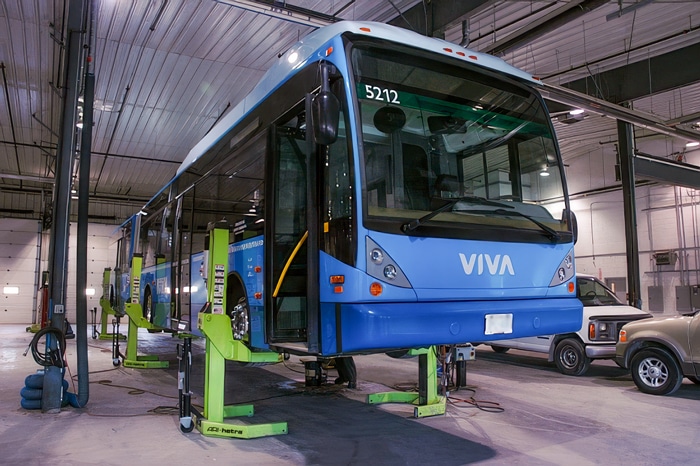
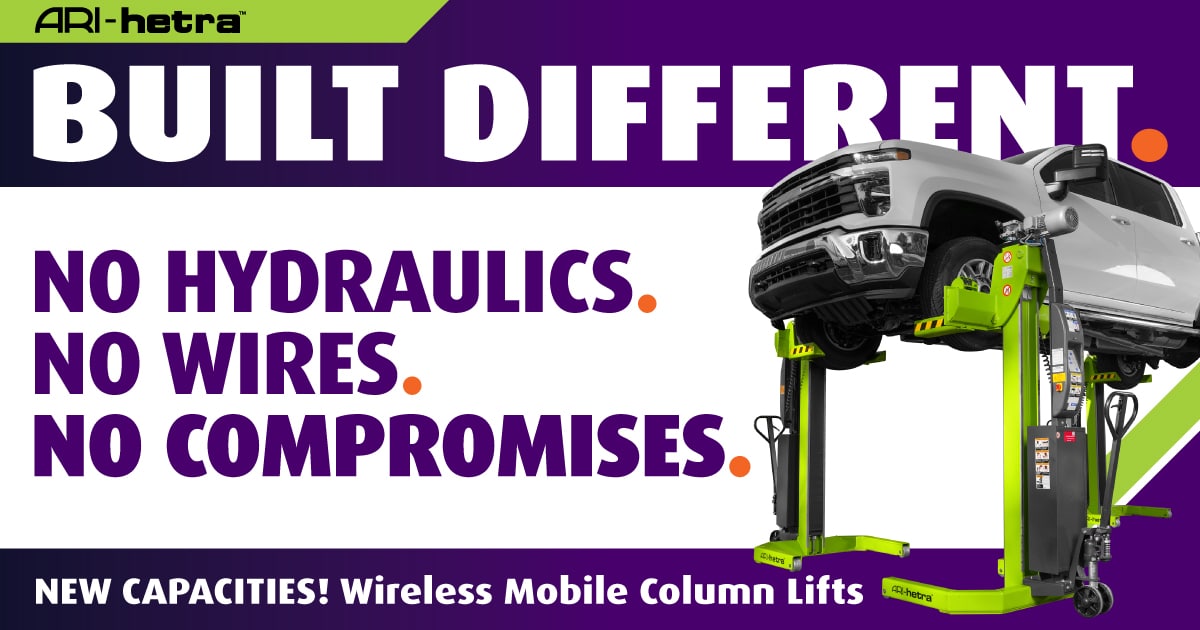
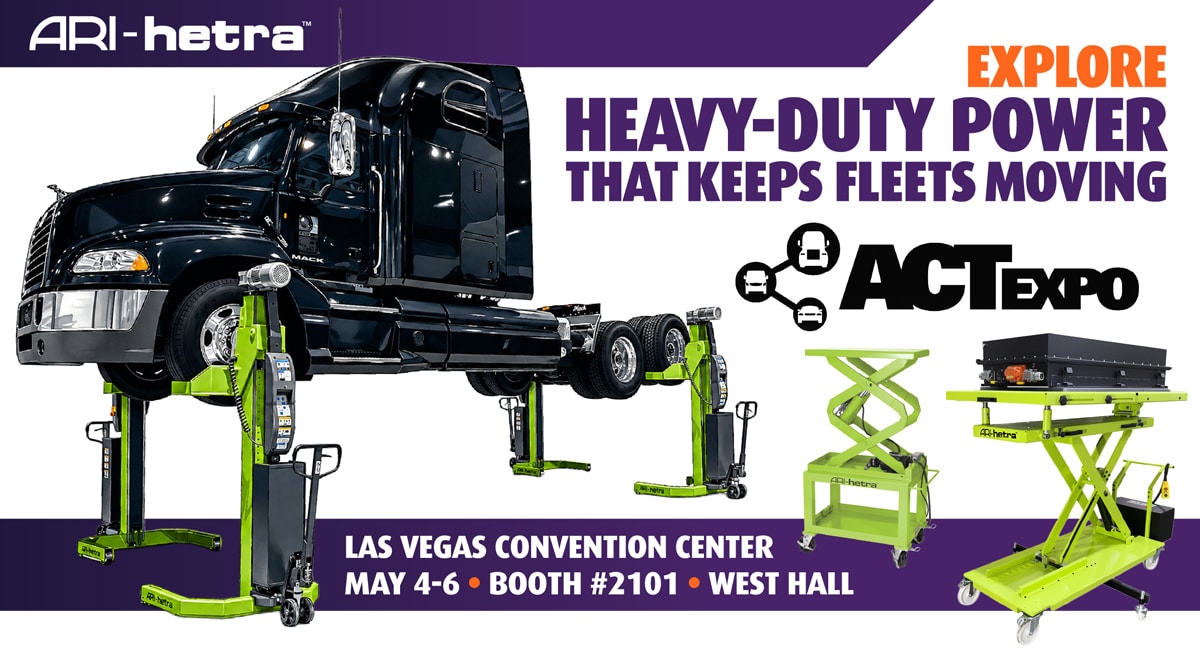
ARI-hetra’s mobile column lifts move to the bus rather than tying every job to a permanently installed bay. Heavy-duty systems can operate with up to eight columns and lift vehicles weighing as much as 144,000 pounds. For repetitive inspections, HDPL drive-on platform lifts provide open under-vehicle access without sliding components that require lubrication.
The point is not merely to raise the bus. It is to finish the work and get it back outside, where it earns its keep.
Challenge 2: One Shop, Several Propulsion Systems
The modern transit fleet is becoming a mechanical potluck.
Agencies are maintaining diesel, natural-gas, hybrid, battery-electric and other vehicle types. Zero-emission buses remain a relatively small share nationally, but FTA projections indicate their numbers will grow significantly by 2030.
Different vehicles bring different weights, wheel sizes, axle arrangements, lifting points and procedures.
ARI-hetra offers wireless, cable battery-powered and line-powered mobile column lifts in several capacity ranges, allowing shops to match the equipment to the vehicle instead of forcing every vehicle into one setup.
No lift is universal. Capacity, wheel diameter, axle position and approved lifting procedures must always be verified. Gravity remains stubbornly committed to the details.
Challenge 3: Electrification Changes the Job
A battery-electric bus is still a bus, but the work beneath it is different.
The Government Accountability Office reports that zero-emission buses will require technicians to develop new capabilities in high-voltage safety, computerized diagnostics, software troubleshooting and electric-drive systems.
Training comes first. But when a large battery pack must be removed, the shop also needs equipment designed to support and position it.
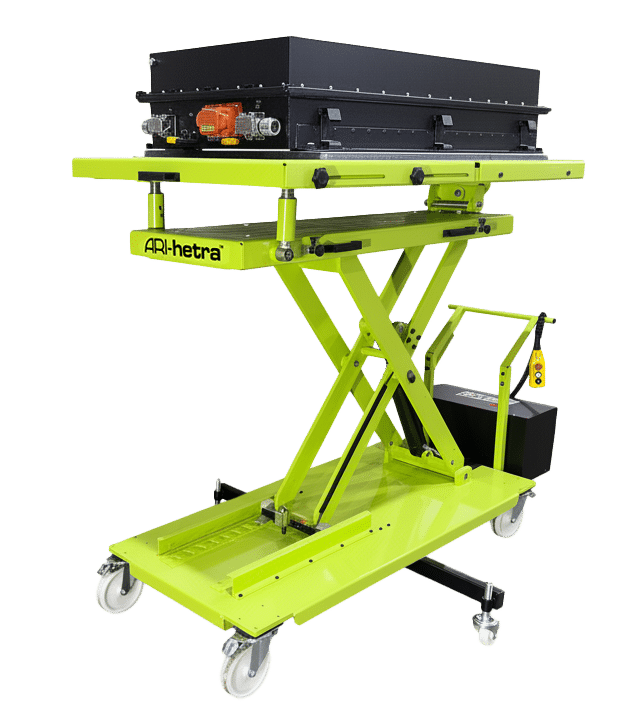
ARI-hetra’s EV Battery Lift provides a 4,500-pound-capacity platform with multidirectional tilt and mounting points for application-specific fixtures. It gives technicians a controlled way to lower, position, and transport heavy battery assemblies.
It does not replace high-voltage training. Neither does a hard hat replace good judgment. Both are still useful.
Challenge 4: Skilled Labor Is Too Valuable to Waste
Hiring an experienced transit technician is difficult. Training one takes time. Wasting that technician’s day connecting cables, moving vehicles between work areas, or waiting on tied up bays or unreliable equipment makes little sense.
Wireless mobile column lifts reduce setup clutter and can be repositioned as workloads change. ARI-hetra’s ball-screw lifting technology eliminates hydraulic cylinders, hoses, seals and fluid, removing several maintenance points from the lift itself.
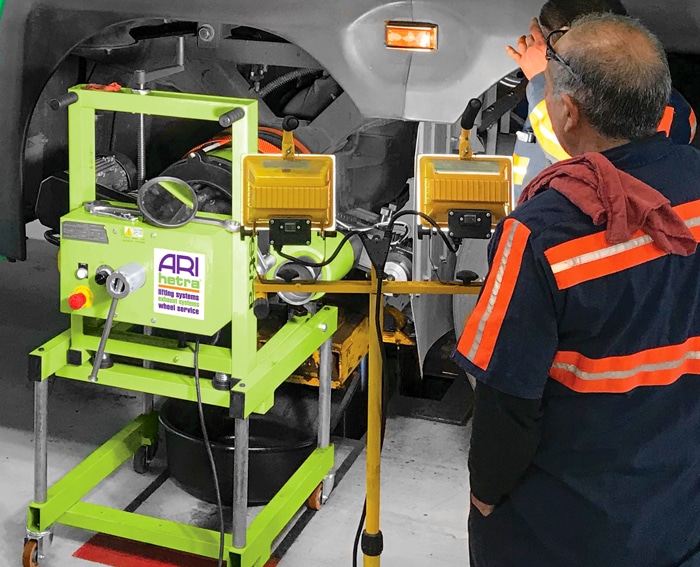
ARI-hetra’s MobileAlign system can also perform alignments at ground level, on a lift or over a service pit, reducing dependence on a dedicated alignment bay.
Good equipment does not replace skilled people. It allows skilled people to spend more time doing skilled work.
Challenge 5: The Shop Equipment Has to Work, Too
FTA estimates the replacement value of bus and other non-rail maintenance facilities at approximately $99.6 billion.
A lift that is down can sideline a bay. A sidelined bay can delay a bus. And a delayed bus has a way of becoming someone else’s very public problem.
ARI-hetra supports its equipment through a nationwide factory-trained service network, preventive maintenance programs and an employee service team with parts-stocked vans.
Its transit offering includes mobile lifts, platform lifts, EV battery handling equipment, exhaust extraction and wheel-service solutions.
Because maintenance equipment deserves a maintenance plan, too.
Preparing for the Fleet You Have and the Fleet That Is Coming
Transit shops are being asked to maintain yesterday’s buses, today’s service schedule and tomorrow’s technology at the same time.
No single machine fixes technician shortages, aging fleets or supply-chain problems. But flexible, dependable equipment can remove bottlenecks, improve access and prevent the shop from adding new problems to an already impressive collection.
For transit maintenance managers, uptime is not a slogan. It is a bus leaving the garage on schedule. That’s the kind of heavy lifting that matters.